Finishes & exposure
Specifying powder-coated aluminium for coastal and exposed projects
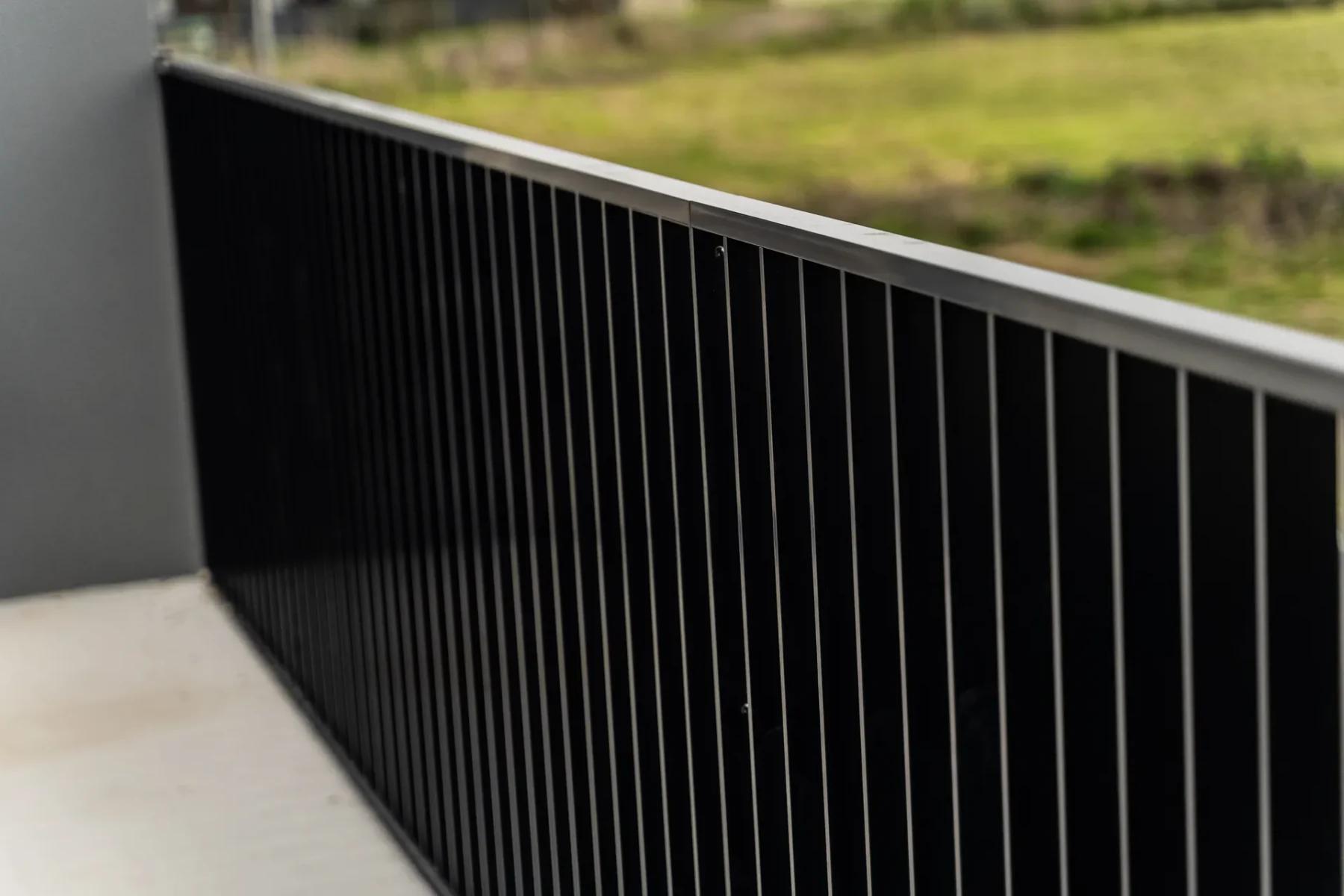
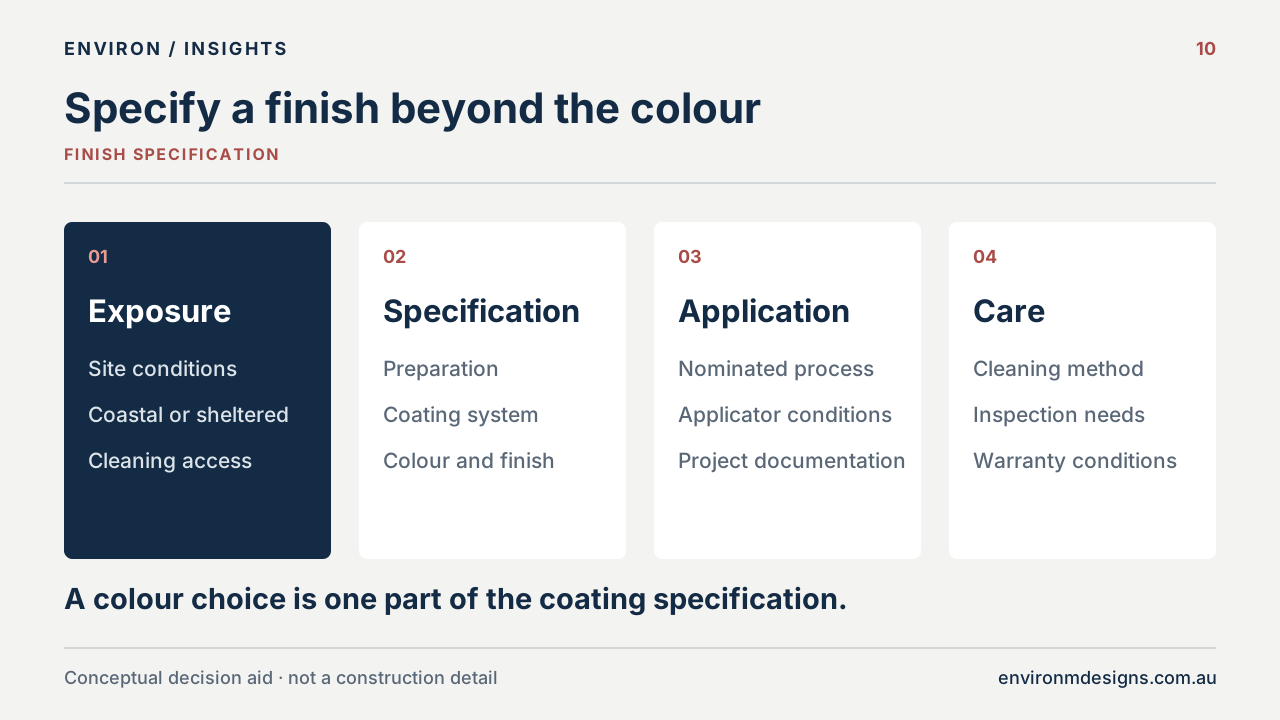
Two pieces of powder-coated aluminium can look similar on a screen while being specified for different exposure and performance requirements. On a coastal or exposed project, the finish needs to be considered with the site, product and coating process. The colour is one part of that decision.
Describe the environment before naming the powder
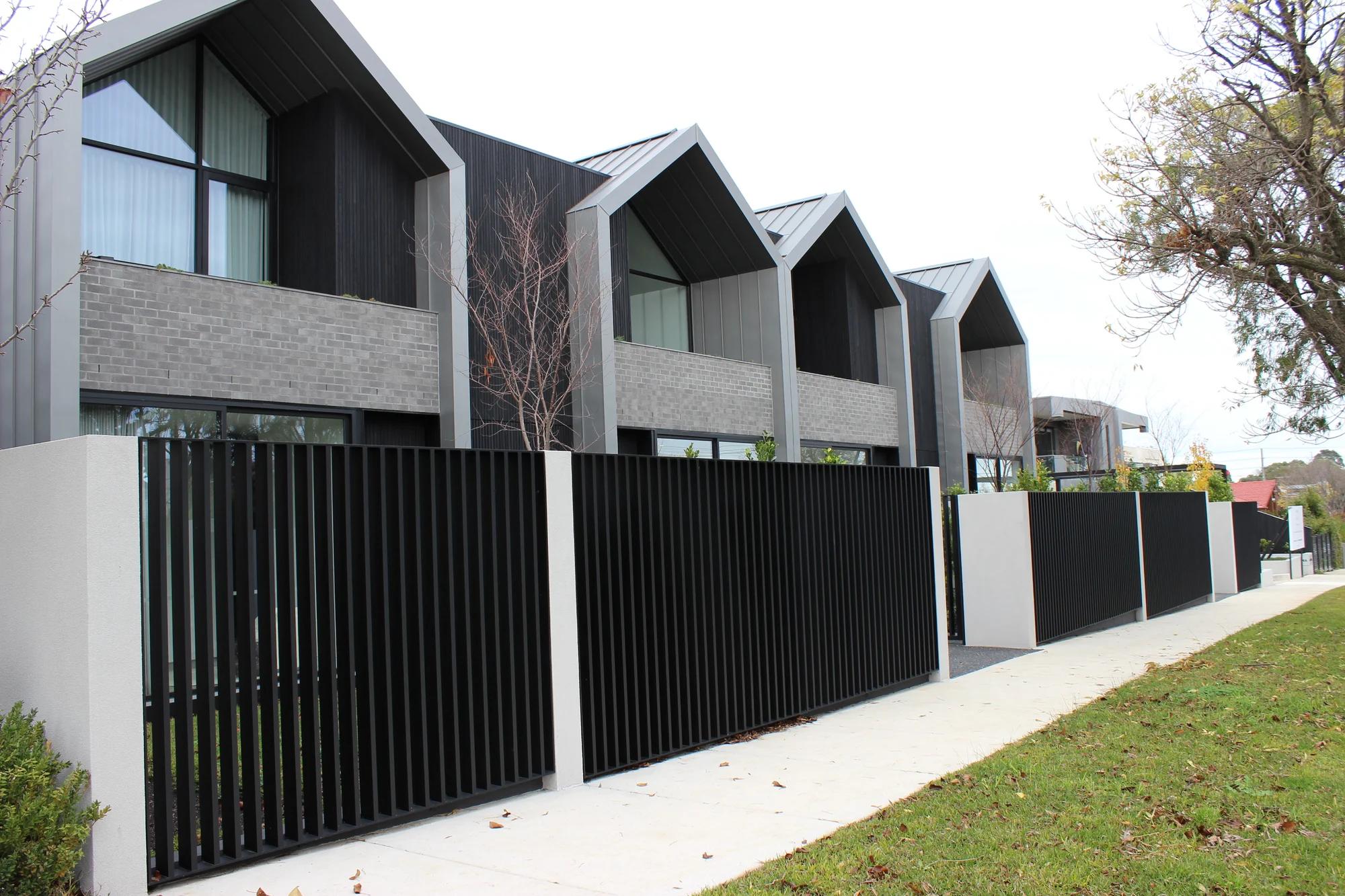
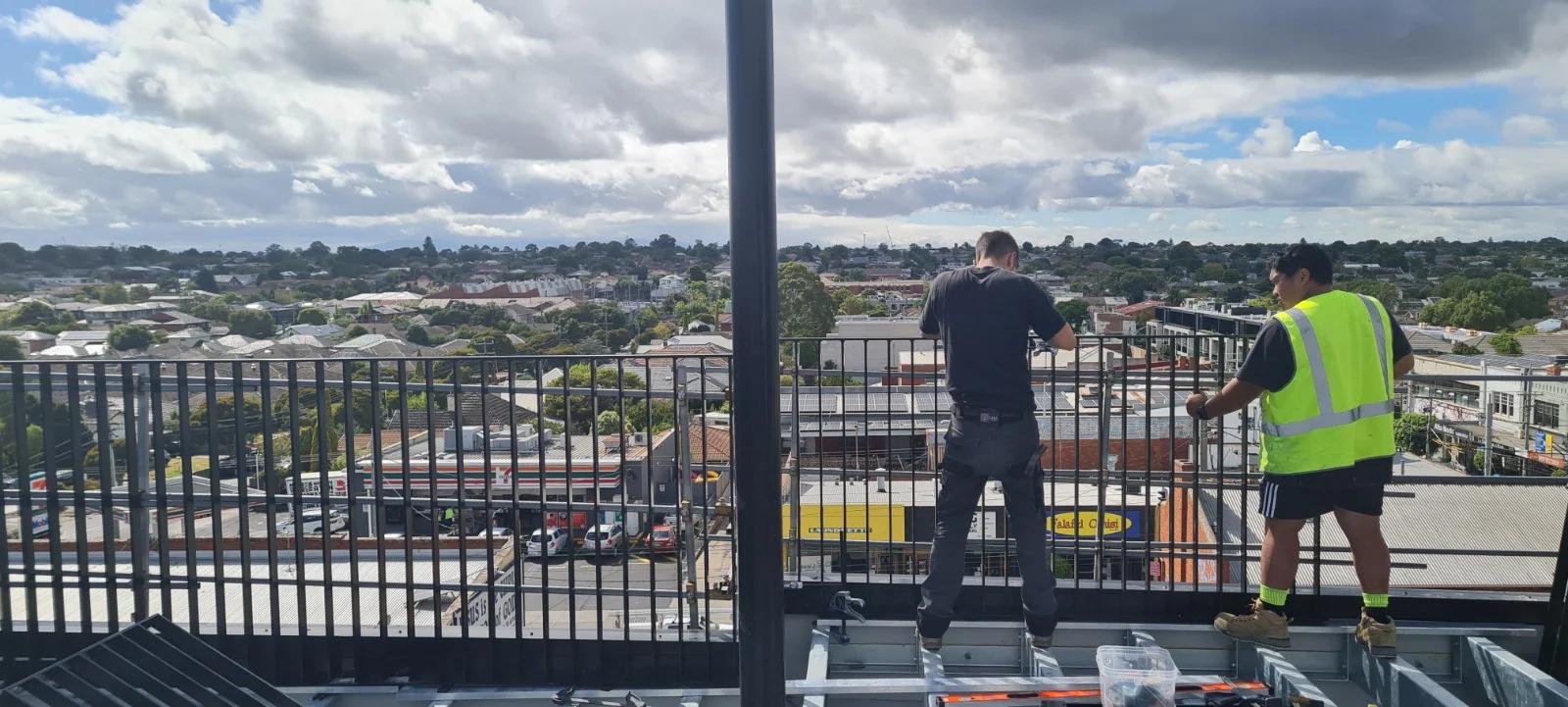
Give the coating discussion a real location. Provide the project address, the element's position on the building and the exposure conditions known to the design team. A sheltered courtyard screen, an exposed upper-level balustrade and a frontage near the coast should not be assumed to have the same brief.
Use the coating manufacturer's current guidance to establish the appropriate range, preparation and application requirements for that environment. Record any project-specific coating specification already issued. If the environment or intended warranty needs the manufacturer's assessment, raise it while the quotation is being developed rather than after the finish has been selected.
Environ offers powder-coated finishes across its architectural aluminium range. The coating specification for a particular project needs to be confirmed with the product scope. A broad description such as 'suitable for Australia' is not enough to decide whether a proposed finish is appropriate at a particular address.
Approve colour, sheen and texture together
A colour reference should identify the manufacturer and product information needed to distinguish it from another finish with a similar name. Include the nominated colour, sheen and texture, together with the coating range where it has been specified. A colour alone does not describe the complete coating system.
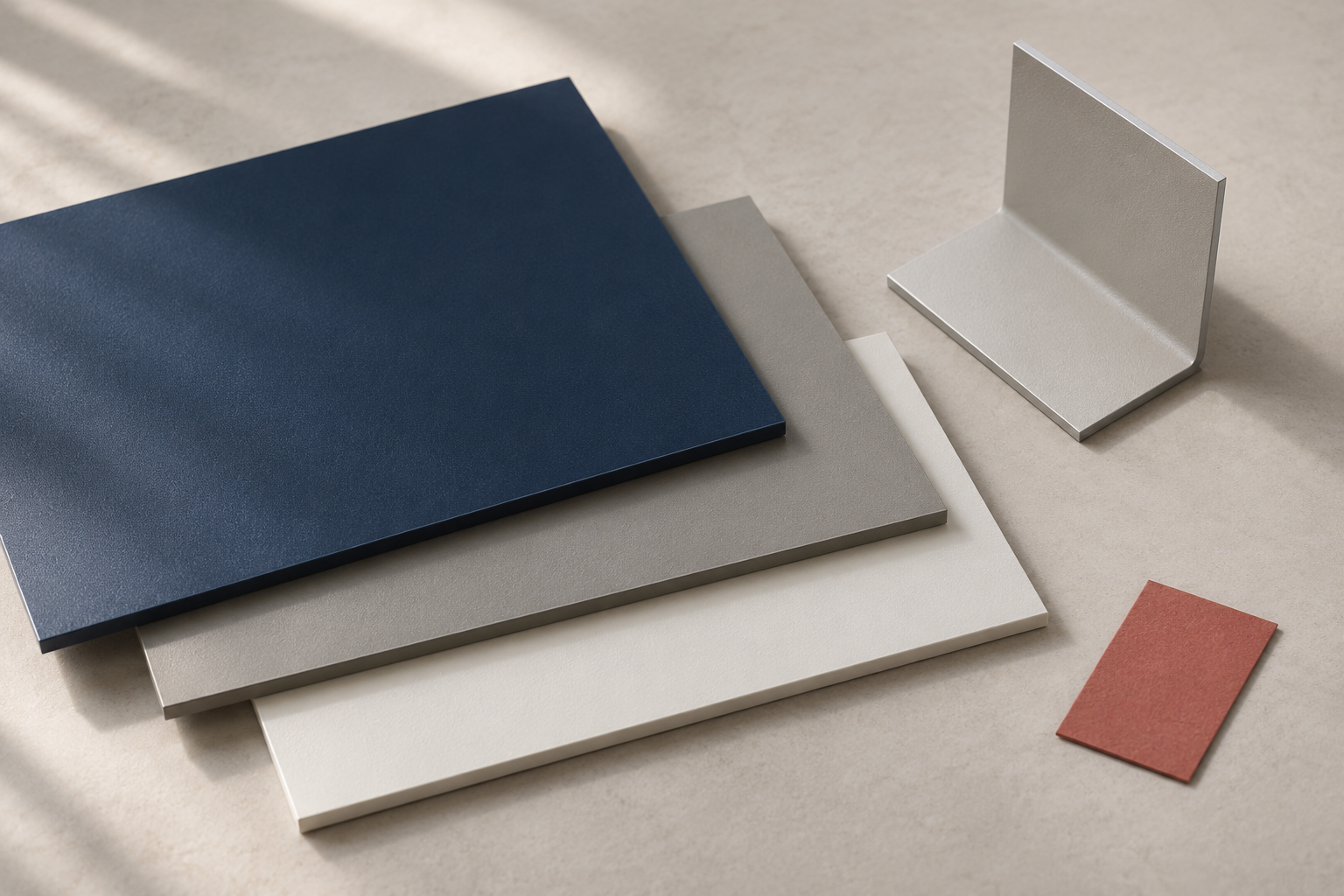
Review the sample in the context where the metalwork will be seen. Adjacent brickwork, concrete, glazing and other coated elements can influence the visual judgement. Profile depth and shadows also change how an assembly reads. That is an appearance review, separate from deciding whether the coating is suitable for the exposure.
For a project with multiple aluminium families, record which finish is intended to be common and where a deliberate change is required. Keep the approved reference with the drawing and finish schedule so that a later substitution can be assessed against the same brief.
Specify the finished result and the application route
The powder product is only one part of the finished system. Ask the responsible coating parties to identify the required substrate preparation, application requirements and any evidence or inspection records needed for the proposed specification. Those matters belong in the agreed scope even though they are not visible on a colour card.
An accreditation claim should be checked for the nominated applicator and the relevant coating programme. It should not be inferred from the fabricator's use of a brand name. Dulux's Australian applicator guidance explains that its project warranties depend on accredited application to the relevant specification and eligible conditions.
This is a useful distinction when comparing quotations. Ask whether each allowance covers the same finish requirements and documentation, rather than comparing two totals described only as powder coating. Any proposed alternative should identify what changes in the product, process or conditions.
Scroll table horizontally
| Brief item | What to record |
|---|---|
| Site and exposure | Address, element location, sheltered/exposed conditions and available environmental assessment |
| Appearance | Manufacturer's colour reference, sheen, texture and approved sample |
| Performance basis | Project coating specification and the manufacturer's assessment of suitability |
| Application | Nominated applicator and required preparation/application documentation |
| Warranty | The actual applicable terms, eligible scope, exclusions and issue process |
| Handover | Care instructions, access requirements and responsibility for maintenance records |
Read what the warranty actually covers
A finish warranty is not a single universal promise. Coating documents may distinguish colour retention and other decorative performance from film integrity. A product or fabrication warranty addresses another scope again. Check the actual document proposed for the project, including the issuer, eligible elements, exclusions and any requirements that must be met before coating.
Ask whether the proposed warranty covers the coating, the fabricated product or both, and which party is responsible for each part. A number taken from a product brochure is not automatically the warranty on the completed metalwork package. Request the terms that apply to the nominated product, application and project environment before accepting the finish specification.
For Environ work, ask for the agreed product and finish terms to be identified in the quotation and handover documentation. Do not assume that a coating manufacturer's programme covers the entire assembly, installation, damage by other trades or every site environment.
Keep the finish brief alive during delivery and installation
The coating decision continues after fabrication. Agree how the completed elements will be handled, stored and protected while the site is active. Identify where the delivery can be received and whether other works will continue nearby. These are practical questions for the site plan, not reasons to leave finish protection until unloading.
Ask the coating supplier for the appropriate response to damage, contamination or a proposed site modification. Avoid treating an unapproved touch-up process as equivalent to the specified factory finish. If an alteration is needed, return it to the responsible parties so the repair method and any effect on the agreed conditions can be established.
The same applies to interfaces with other materials. Where fixings, supports or adjacent finishes need compatibility or isolation details, have the relevant design and coating parties resolve them in the project documents. A general article cannot determine the correct detail for every assembly.
Make maintenance achievable from the start
Obtain the nominated coating manufacturer's care instructions and pass them to the owner or facilities team. The appropriate cleaning approach and frequency need to reflect the actual coating and environment; there is no universal interval that should be copied into every Environ project.
Maintenance also needs access. Consider how exposed upper-level elements, recessed faces and areas behind planting or screening will be reached. If a design creates surfaces that are difficult to inspect or clean, resolve that constraint before the maintenance plan becomes an obligation nobody can carry out.
Keep the selected coating information, approved sample reference, applicable warranty and care requirements together at handover. For the next project enquiry, send those requirements with the drawings. That gives Environ a clear basis for reviewing the finish alongside the systems, quantities and delivery scope.
Reference desk
Sources and further reading
Primary guidance and resources for the decisions discussed in this article. Check the edition and requirements that apply to your project.