Supply & delivery
Planning interstate supply of architectural aluminium: drawings, packaging and site delivery
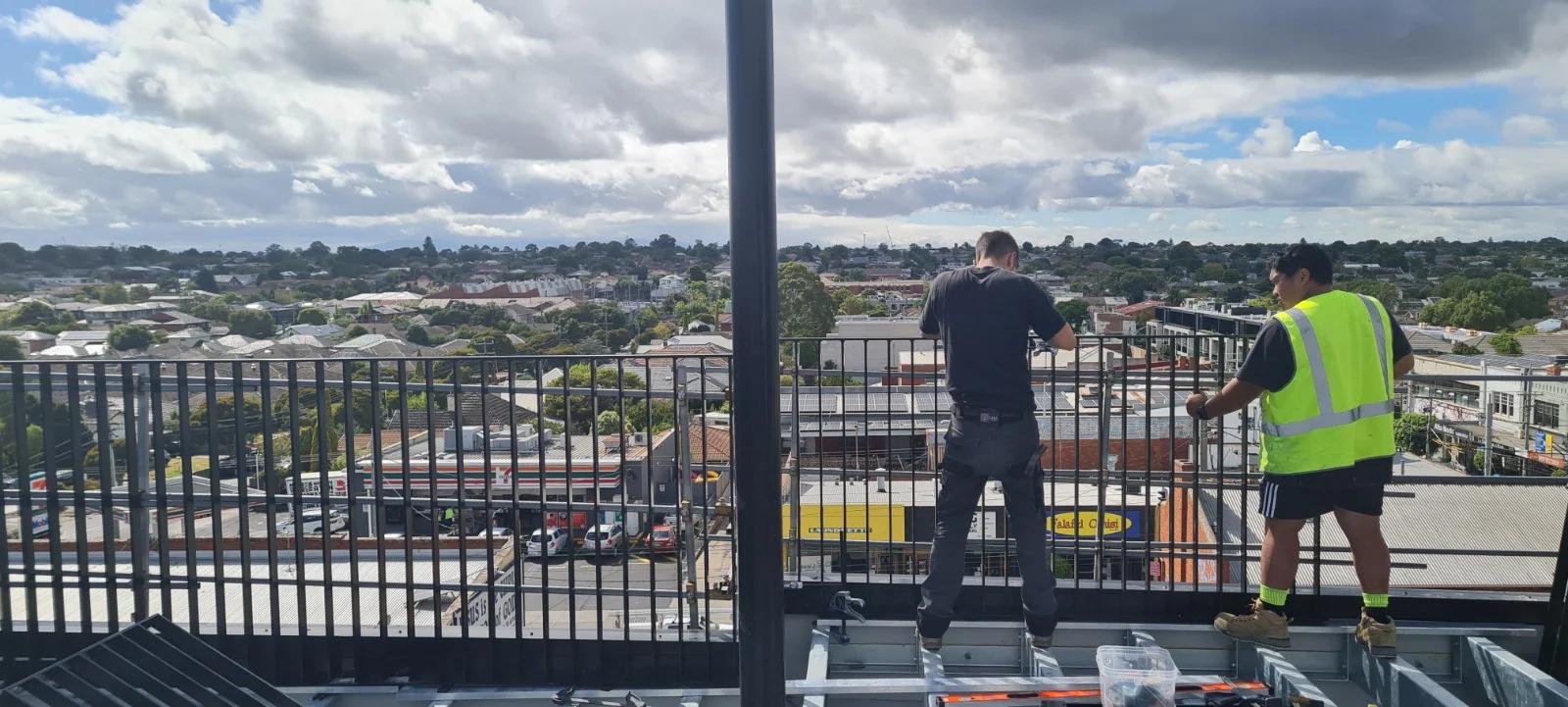
Ordering architectural aluminium for a project outside Victoria involves more than choosing a product and providing a postcode. The assembly route, approved dimensions, delivery stages and receiving arrangements need to fit the site. A clear supply plan connects those decisions before fabrication is released.
Confirm the system and destination together
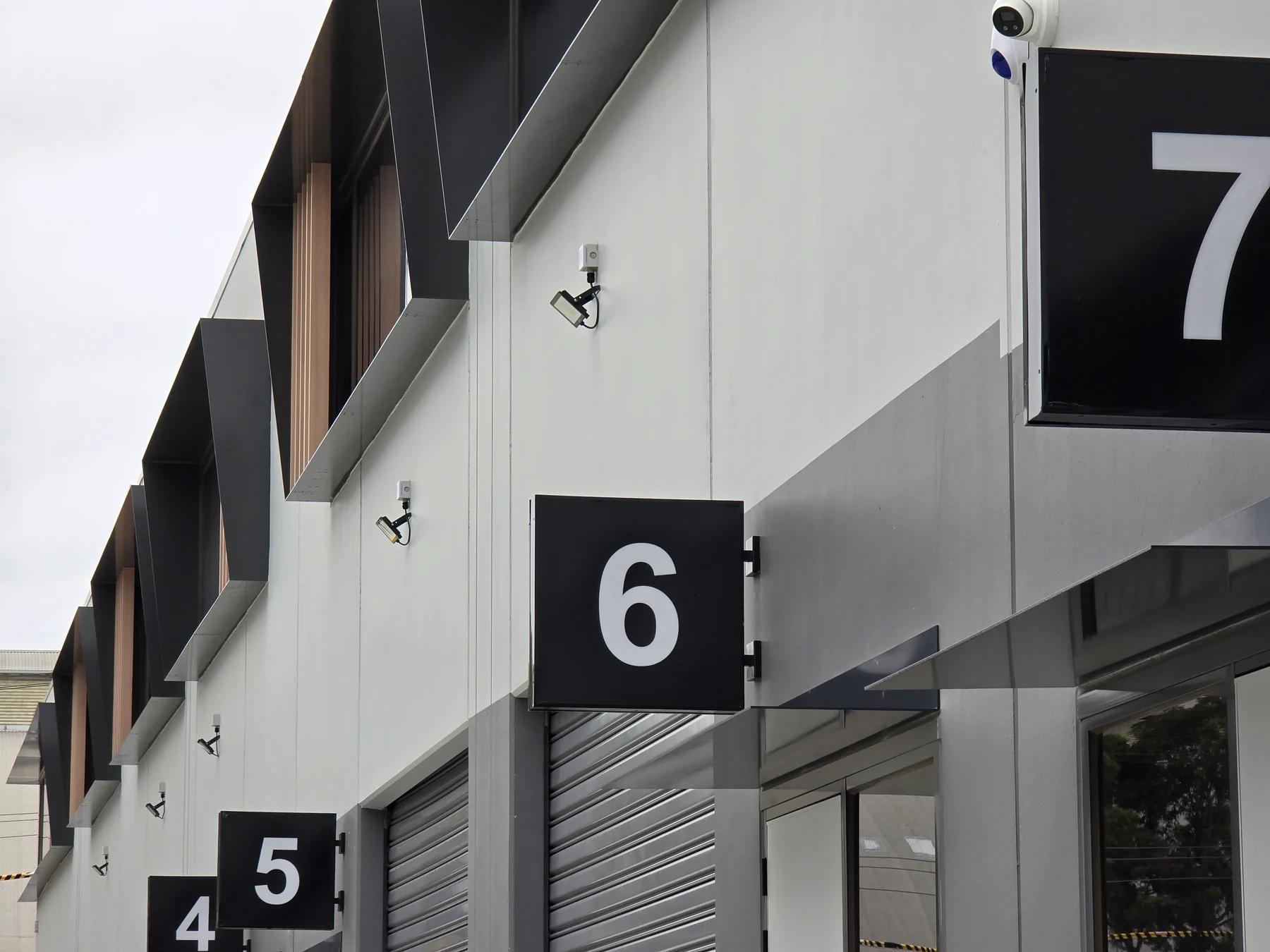
Start with the product families, project address and intended scope. Environ supplies architectural aluminium for projects across Australia, but the practical supply route depends on the selected system. Modushield window shrouds can be supplied Australia-wide; fully welded shroud assemblies are supplied within Victoria.
That distinction should be resolved before an interstate project carries a particular assembly into its tender documents. If a design is still being developed, discuss the available construction route rather than assuming that an image of one assembly represents every delivery option.
Supply coverage and installation coverage are separate questions. Do not assume that shipping an Environ product interstate includes an Environ site-measure or installation service. Confirm who provides the verified dimensions, who installs the package and what documentation or coordination each party needs. The product-specific enquiry is the place to establish that scope.
Window-shroud supply
Modushield: Australia-wide supply. Fully welded shroud assemblies: supply within Victoria. Completed size, transport route, unloading and handling are reviewed for the project.
Align drawing approval with the order
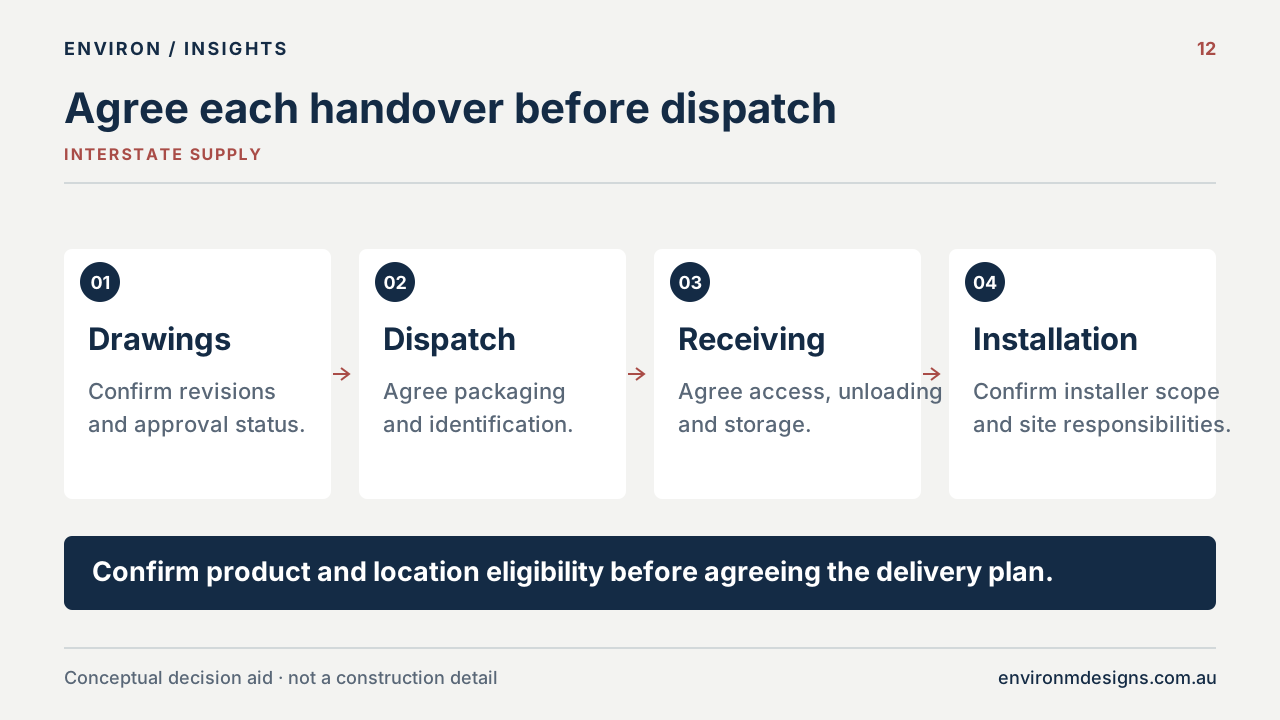
Before fabrication, the product needs to be defined against the current project information. Opening and run references, dimensions, support conditions, finish and quantities should connect to the agreed drawings. Where an interstate site measure is arranged by another party, identify who is responsible for verifying that information.
Keep the approval record specific. A design comment, a pricing acceptance and a shop-drawing approval do different jobs. If an approval is conditional on revised dimensions or a structural detail, that condition needs to be resolved through the agreed review process before the drawing is treated as a fabrication instruction.
Use consistent references through the schedule and later site coordination. For example, window marks that distinguish different shroud types also help the receiving and installation teams understand where those items belong. Confirm the identification information needed for the actual order rather than assuming a particular labelling service is included.
Plan delivery around the work sequence
The sequence of installation can matter as much as the total quantity. A large package may cover several buildings, floors or construction stages. Discuss whether the site needs the order as one delivery or in agreed releases, and identify how each stage relates to the drawings and programme.
Include both the required arrival period and the date when information can be approved. A request for an early delivery does not remove the time needed to resolve the product, obtain materials, fabricate and finish the work. Environ reviews lead time against the system, quantity, drawing status, finish and current production schedule.
If access equipment or another trade's work controls the installation sequence, make that dependency visible. A product arriving before the site can receive or store it creates a different problem from a product arriving late. An agreed delivery plan should address both.
Discuss packaging and handling as project requirements
The dimensions and form of the selected assembly influence its handling. A factory-assembled frame and a set of modular components create different receiving and assembly tasks. Compare those tasks alongside appearance and fabrication, rather than assuming that the most compact transport arrangement will always be the simplest installation.
Give Environ the handling constraints that are known: available unloading space, access through the site, lifting limits or access routes identified by the appointed site team, storage conditions and any stage-specific restrictions. Ask for the proposed packaging and delivery method to be confirmed against those requirements.
Agree who provides unloading equipment and labour, who receives the order and how the elements will be moved to their next location. Do not leave those responsibilities to an expectation that the transport arrangement includes everything. The appropriate handling method must be determined for the actual items and site conditions.
Make the receiving plan usable on delivery day
A site contact, vehicle access information and the receiving area should be clear to everyone involved. Where access is constrained by booking windows, neighbouring properties or work in progress, raise that while the delivery is being planned. The available route may change as construction advances, so update the relevant parties when it does.
Plan where the products will be checked and stored, with suitable handling and protection agreed for the finish. The receiving team should be able to compare the order with its delivery documentation and record any issue through the agreed process. Establish that process before the package arrives.
Keep storage and installation information connected to the coating requirements. Protection that is appropriate in transport may not be appropriate for indefinite site storage. Obtain the applicable supplier instructions rather than treating any wrapping or temporary cover as a complete storage method.
Scroll table horizontally
| Handoff | Agree before release |
|---|---|
| Project team to fabrication | Current drawings, verified dimensions, quantities, finish and approval status |
| Fabrication to transport | Agreed assembly format, packaging and delivery-stage requirements |
| Transport to site | Access, contact, unloading responsibilities and receiving arrangements |
| Site to installation team | Product references, storage/protection instructions and installation documentation |
| Installation to owner | Relevant product, finish, care and agreed warranty information |
Keep installation and handover within the agreed scope
The installation team needs the documentation applicable to the supplied system and the actual support conditions. Have the relevant qualified professionals resolve the fixing and structural requirements; a general product photograph or delivery note does not establish a suitable connection.
Confirm how changes found on site will be handled. If an opening, support or level differs from the approved information, refer the discrepancy to the responsible parties before modifying the product or its fixings. That protects the coordination work already completed and allows the implications for structure, finish and programme to be assessed.
At handover, keep the agreed product and finish information, care requirements and warranty documents with the project record. An interstate order is easier to manage when each stage has a named responsibility and a clear information handoff. Send the project brief and available drawings early so the supply route can be reviewed with the product choice.
Reference desk
Sources and further reading
Primary guidance and resources for the decisions discussed in this article. Check the edition and requirements that apply to your project.