Materials · Specification
Aluminium vs galvanised steel: choosing architectural metalwork for the project
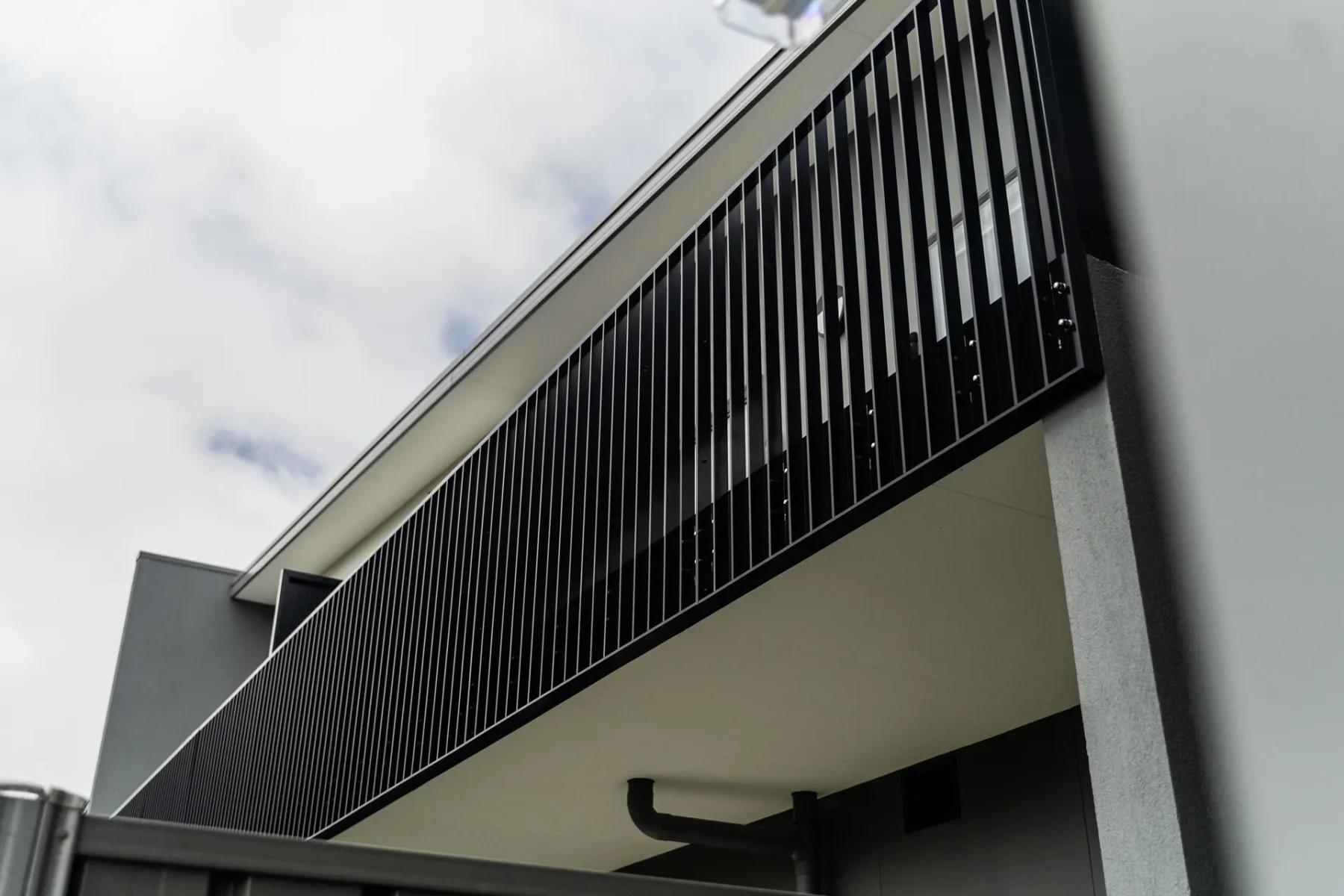
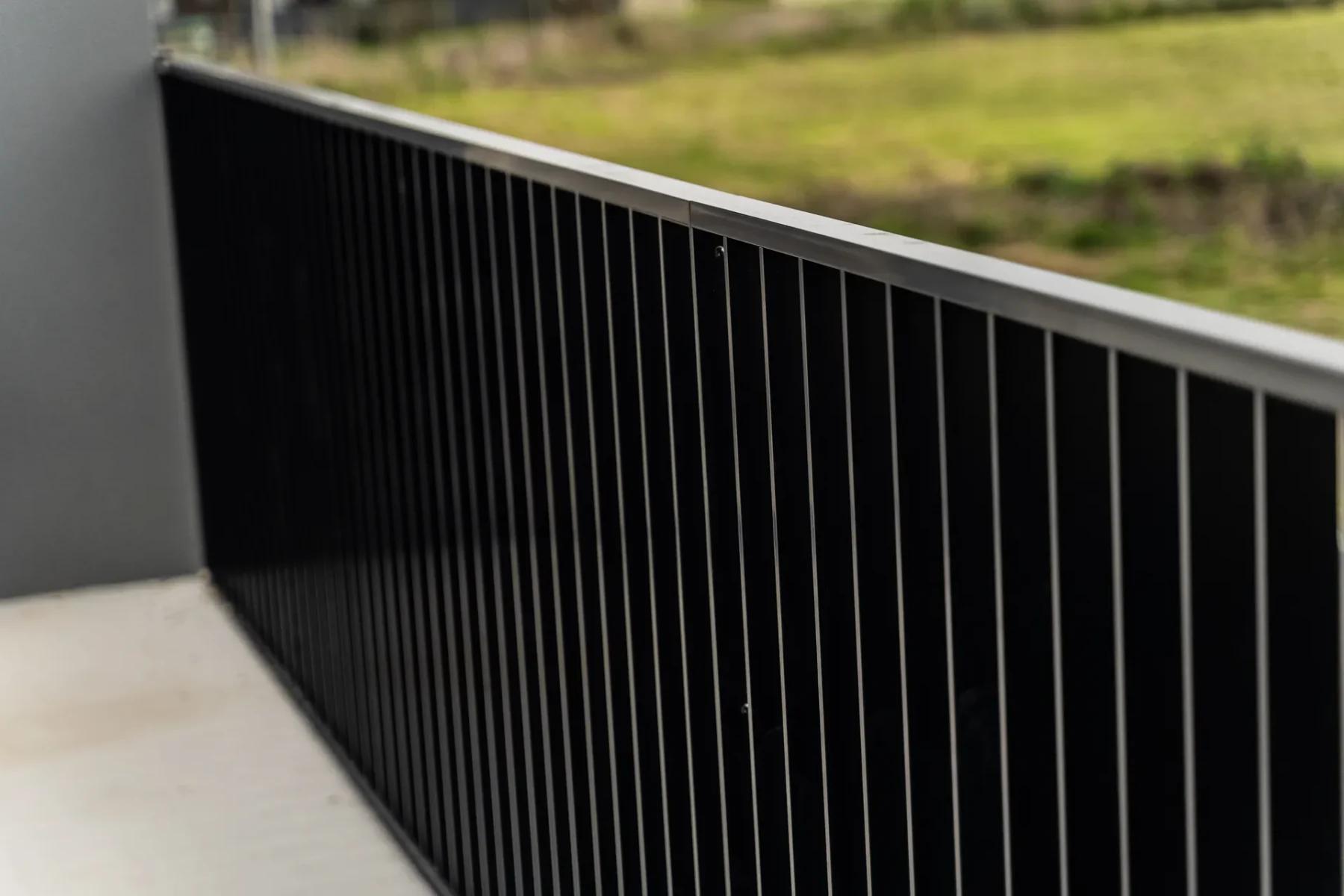
Aluminium and galvanised steel can both appear in architectural metalwork, but a useful comparison needs to describe the proposed assembly. A balustrade, gate or screen brings together members, connections, supports and a protective finish. Material properties help explain the options; the project detail establishes what each option must do.
Compare two defined systems
Aluminium describes a base material and its alloys. Galvanised steel describes steel with a zinc coating; it does not identify the steel grade or the complete corrosion-protection specification. Establish the alloy or steel grade, member arrangement, connections, protective treatment and intended use before comparing the two.
Keep the required outcome constant. For a balustrade, compare arrangements that address the same building location and project requirements. For a gate, compare the same opening, operation, infill and hardware scope. Changing the frame design, support assumptions or finish while comparing prices obscures the reason for the difference.
Record whether a steel proposal is hot-dip galvanised after fabrication or uses another zinc-coated product. The Galvanizers Association of Australia's durability guidance distinguishes coating types and thicknesses when discussing protection. The single word 'galvanised' is too broad to establish the exposure performance of every steel assembly.
Separate material weight from the weight of the fabricated assembly
Aluminium's lower density is a useful distinction. The Australian Aluminium Council describes aluminium as weighing about one-third as much as steel of the same size and shape. That comparison concerns equal geometry; it does not mean every aluminium balustrade or gate will be two-thirds lighter than a steel alternative.
The finished weight depends on the members, wall thicknesses, plates, connections and hardware in each design. Ask for the weight of the actual proposed components when planning delivery, lifting and installation. A material-density comparison cannot establish the handling method or the load that the building must support.
For example, an upper-level screen may arrive as separate elements or a larger assembled frame. Its delivery size and lifting points can matter as much as its material. Compare how each proposed package reaches its final location, rather than assuming aluminium eliminates lifting equipment or makes installation straightforward in every case.
Check structural performance at the system level
A claim that one metal is 'stronger' does not resolve the design of a balustrade, gate or screen. The grade or alloy, section geometry, connections, support arrangement and fabrication details all belong in the assessment. The European Aluminium design comparison also distinguishes stiffness from strength: material behaviour is not captured by a single strength-to-weight statement.
Ask the responsible designer to assess the proposed assembly against the project's requirements, including the relevant movement and deflection criteria. Do not substitute aluminium members into a steel detail, or steel into an aluminium detail, while retaining the same sizes and connections without review.
A balustrade's mounting arrangement is part of that decision. An otherwise similar panel fixed to a different slab edge or support is a different installation condition. The balustrade mounting guide explains the information needed to compare those interfaces.
Specify corrosion protection for the actual exposure
Aluminium forms a protective oxide film in normal conditions, but corrosion resistance does not mean immunity in every environment. The Australian Aluminium Council's technical FAQs explicitly caution that environmental conditions affect corrosion and do not support a universal time-to-failure claim. The alloy, surface treatment, exposure and joint details still need to be considered.
For galvanised steel, protection depends on the coating and its exposure. GAA's durability guidance relates the protective life of zinc coatings to their thickness and the environment. A fixed service-life range should therefore not be attached to all galvanised metalwork, and a life-to-first-maintenance estimate should not be presented as the lifespan of the complete assembly.
A coastal address is a reason to define the exposure carefully, rather than declare a material winner. Record the element's location, salt and industrial exposure where relevant, sheltered surfaces and cleaning access. Ask the relevant material and coating parties to confirm the proposed system for those conditions. A sheltered face and a rain-washed face on the same building may need different attention.
Both materials need a clear finish specification
Powder-coated aluminium offers a way to coordinate the colour, sheen and texture of architectural elements. Select a coating system for the substrate and exposure, then approve its appearance through the appropriate reference and sample. A colour name alone does not establish the required preparation, application or warranty conditions.
Galvanised steel is not restricted to an exposed silver-grey appearance. GAA describes painting and powder coating over galvanising as duplex coating. Its guidance stresses compatible specifications, preparation and application, with the coating system selected for the intended service conditions.
If a steel option is to be powder-coated and an aluminium option carries the same visual brief, compare samples of the specified finished systems. Do not assume that matching a colour reference produces identical texture or surface appearance. The fabrication and substrate remain part of the visible result.
Review the junctions between different metals
The choice is rarely confined to one metal throughout the installation. Aluminium may connect to steel supports or use stainless-steel hardware; galvanised assemblies also meet other metals. The connection needs its own compatibility review.
ASSDA's guidance on galvanic corrosion explains the combination of electrical contact, a conductive liquid and a sufficient difference between the metals. Exposure and the relative wetted areas matter. The response should therefore be a specified joint detail, not a blanket assumption that all dissimilar-metal contact is acceptable or that all such contact will fail.
Have the responsible designer and material suppliers establish where isolation, drainage or other protection is needed. Keep that detail with the fixing information so the intended protection survives installation. A general instruction to add a washer does not describe every possible electrical path or wet junction.
Compare installed scope and an achievable maintenance plan
There is no dependable rule that aluminium always costs more initially or that galvanised steel always costs more to maintain. Quotations need to cover the same quantities, performance requirements, fabrication, finish, supports, freight, installation and documentation before their totals can be compared.
Ask what maintenance each specified finish and hardware package requires, how the surfaces will be reached and which party is responsible. Cleaning an accessible fence and reaching upper-level screened faces are different tasks even if the coating is the same. Obtain the actual coating and hardware instructions rather than treating 'low maintenance' as a maintenance plan.
For galvanised work, GAA's care guidance addresses cleaning, sheltered corrosive conditions and repair of damaged coatings. Aluminium finishes also need their nominated care and repair process. Neither material removes the need to identify damage, contamination or changes to the original exposure.
Where a long-term cost assessment is required, state the assumptions: inspection access, cleaning and repair activities, replacement scope and the period being assessed. Without those inputs, a claim about lower lifetime cost is a preference presented as a calculation.
Use product evidence for environmental comparisons
Recyclability is useful, but it does not establish that one fabricated option has the lower environmental impact. The quantity of material, its production route, fabrication, coating, transport, maintenance and end-of-life assumptions belong in the comparison.
Ask for relevant, current environmental product information where the project requires it. EPD Australasia describes an Environmental Product Declaration as verified life-cycle information and makes clear that an EPD does not itself declare a product environmentally superior. Compare equivalent functions and compatible assessment boundaries with the project's environmental assessor.
A generic statement about the energy saved by recycling aluminium is not evidence that a particular aluminium gate has a lower carbon footprint than a particular steel gate. Nor does a material's ability to be recycled establish that the finished assembly will be recovered. Ask how it can be separated and what recovery routes are available. Avoid assigning recycled content or an environmental rating to Environ products without the relevant product documentation.
Make the material decision traceable
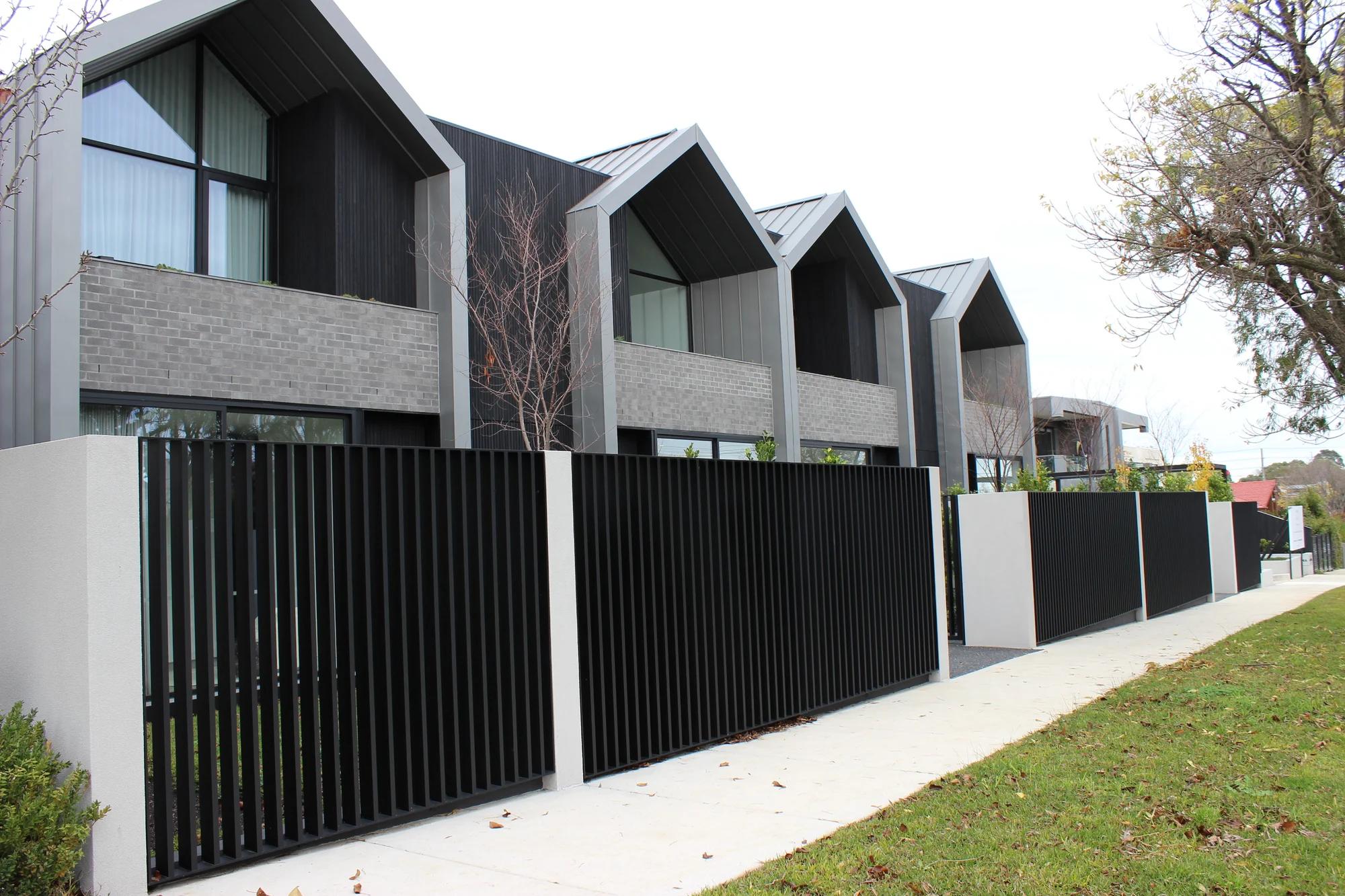
For a balcony, start with the building edge, barrier requirements and intended appearance. For a frontage, add the gate operation, hardware and fixed-panel relationship. The material decision becomes clearer when each option is described against the same project brief.
Environ's architectural range is fabricated in aluminium. Bring the intended application, drawings, exposure and finish requirements to the discussion so the proposed aluminium system can be reviewed on that basis. If the project is comparing a steel alternative, keep its supporting evidence and scope alongside the aluminium proposal.
Scroll table horizontally
| Decision | Compare on the same basis |
|---|---|
| Performance | Intended use, applicable requirements, complete member and connection design, and supporting structure. |
| Handling | Actual component weight, size, delivery arrangement and installation access. |
| Durability | Defined exposure, substrate and protective system, including joints and coating repair provisions. |
| Appearance | The specified colour, sheen, texture and samples of the finished systems. |
| Commercial scope | Equivalent fabrication, finish, supports, transport, installation and documentation allowances. |
| Maintenance and environmental assessment | Achievable care activities, access and relevant product evidence assessed with consistent assumptions. |
Reference desk
Sources and further reading
Primary guidance and resources for the decisions discussed in this article. Check the edition and requirements that apply to your project.
- Australian Aluminium Council — aluminium properties
- Australian Aluminium Council — technical FAQs
- European Aluminium — material comparison in Aluminium in Commercial Vehicles
- Galvanizers Association of Australia — protective life of galvanised coatings
- Galvanizers Association of Australia — painting and powder coating galvanising
- ASSDA — galvanic and dissimilar-metal corrosion
- Galvanizers Association of Australia — care and maintenance of hot-dip galvanised steel
- EPD Australasia — what an EPD does and does not establish